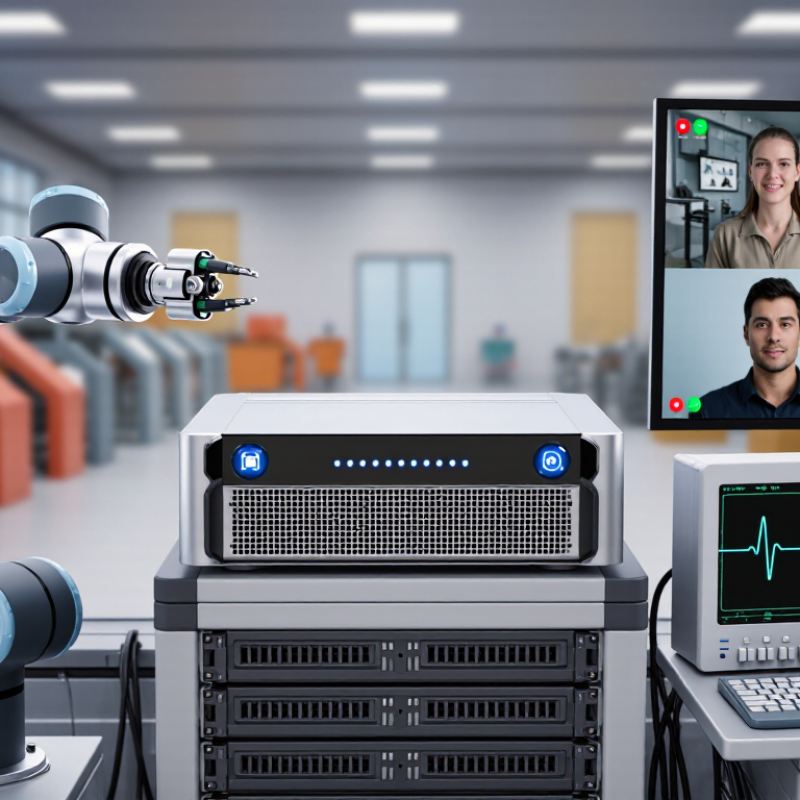
An edge AI server manufacturer builds the physical infrastructure that brings machine learning closer to where data is created. These systems may sit beside a factory robot, inside a hospital network, or within a retail store. They process video, sensor signals, and operational data without sending every frame to a distant cloud.
The market is moving quickly. IDC’s Worldwide Edge Spending Guide projected global edge computing investment would reach about $232 billion in 2024. Gartner also forecast that 75% of enterprise-generated data would be created and processed outside traditional data centers by 2025. These figures explain why buyers now examine more than processor speed. They assess thermal design, workload reliability, cybersecurity controls, latency, and long-term service support.
The edge AI server manufacturer is therefore becoming an infrastructure partner, not merely a hardware supplier. HPE President and CEO Antonio Neri described the principle clearly: “The edge is where the data is created, and that’s where the intelligence needs to be.” His statement captures the central shift from centralized computing to local decision-making.
But the industry is not perfectly defined. Some vendors sell compact GPU servers, while others provide complete edge platforms with software and monitoring. Marketing language can blur those differences. Buyers should question performance claims, test real workloads, and verify independent specifications. A server that performs well in a laboratory may struggle beside dust, vibration, or unstable power.
This introduction examines how an edge AI server manufacturer designs, validates, and supports systems for demanding environments. It also considers the gaps between impressive specifications and dependable field experience. That distinction matters.
Definition and Role of an Edge AI Server Manufacturer
An edge AI server manufacturer designs and builds computing systems for processing data near its source. The definition is not perfectly fixed. A manufacturer may produce hardware, develop firmware, and integrate acceleration components for machine learning workloads. These systems often sit in factories, clinics, warehouses, vehicles, or remote communications rooms. They reduce the need to send every camera frame or sensor reading to a distant cloud.
The manufacturer’s role extends beyond assembling metal cabinets. Engineers select processors, memory, storage, networking parts, and cooling systems for continuous operation. They test latency, power consumption, temperature tolerance, and workload stability. A reliable supplier documents these results clearly. It also provides installation guidance, driver updates, spare parts, and technical support throughout the server’s service life. Small details matter. Dust filters, cable access, and fan noise can affect daily operations.
In practical deployments, the manufacturer should understand both AI software and physical environments. A server that performs well in a laboratory may struggle beside vibrating machinery or in a hot control room. Manufacturers therefore validate systems under realistic conditions, although testing can never predict every failure. This is where careful monitoring helps. Operators may discover unexpected bottlenecks, uneven model accuracy, or higher maintenance costs after deployment. A responsible manufacturer treats these findings as engineering feedback, not inconvenient criticism.
Core Technologies Used in Edge AI Server Manufacturing
What Is an Edge AI Server Manufacturer?
An edge AI server manufacturer builds compact computing systems for processing data near its source. Unlike distant cloud systems, edge servers can analyze camera feeds, machine signals, or sensor readings locally. This reduces delay and limits unnecessary data transfers. The work demands more than assembling standard components. Engineers must match hardware, software, cooling, and field conditions carefully.
Core Technologies Used in Edge AI Server Manufacturing
AI accelerators provide the parallel processing needed for computer vision and real-time inference. High-speed processors, memory, and storage must work together without creating bottlenecks. Thermal engineering is equally important. A dusty factory or roadside cabinet may offer limited airflow, so manufacturers often use reinforced cooling paths and temperature monitoring. Reliable networking supports fast communication with sensors and control systems. Secure boot, encrypted storage, and controlled access help protect operational data. These details sound ordinary. They often decide whether a server remains dependable after months of vibration and heat.
How Edge AI Server Manufacturers Design and Build Systems
An edge AI server manufacturer does more than assemble processors, memory, and storage. It designs a complete system for decisions made near cameras, sensors, machines, or users. The 2024 Worldwide Edge Spending Guide projected global edge investment at roughly $232 billion. That scale demands practical engineering, not only impressive specifications.
Design usually starts with workload profiling. Engineers measure model size, inference latency, bandwidth, and peak temperature. They then select accelerators, processors, memory capacity, and compact storage. A factory floor may need a short-depth chassis, filtered airflow, and vibration resistance. A roadside cabinet may require sealed housing and remote monitoring. Power matters sharply. The International Energy Agency estimated that data centers consumed about 415 terawatt-hours of electricity in 2024, so efficient cooling and power delivery are central design requirements.
Manufacturers validate systems under sustained loads, not brief demonstrations. They test thermal throttling, network loss, dust exposure, firmware recovery, and model updates. Security checks should include device identity, encrypted communications, and controlled access. Reliability improves when components are replaceable. Sometimes, however, a smaller accelerator is wiser than the fastest one. No design is perfect. Extra performance can create heat, noise, and maintenance costs. Engineers must document these compromises clearly, because field conditions rarely match the laboratory.
Industries and Applications Served by Edge AI Servers
What Is an Edge AI Server Manufacturer?
An edge AI server manufacturer designs and builds computing systems that process data near where it is created. These systems combine processors, memory, storage, networking, and software support for local artificial intelligence workloads. Unlike distant cloud platforms, edge servers can analyze camera feeds, machine signals, and sensor readings with less network delay. The manufacturer also considers heat, dust, power limits, and physical security.
Industries use edge AI servers when fast decisions matter. In manufacturing plants, servers inspect products on moving lines and detect equipment vibration before failures occur. Hospitals can process medical images or monitor connected devices within controlled networks. Retailers use them to study shelf conditions, customer movement, and checkout activity without sending every video stream elsewhere. In transportation, local systems support traffic analysis, fleet monitoring, and driver assistance. Agriculture operations may examine crop images, soil readings, and irrigation needs from remote sites.
Energy facilities use edge servers to monitor turbines, substations, and pipelines. Public infrastructure can apply them to water systems, environmental sensors, and emergency coordination. Their value depends on careful deployment, not impressive specifications alone. A poorly placed server may overheat or produce unreliable results. Models also need regular testing because lighting, weather, and operating conditions change. Human review remains important, especially when an automated alert could interrupt production or affect safety. Some projects promise too much. Practical teams measure latency, accuracy, maintenance time, and total power use before expanding.
What Is an Edge AI Server Manufacturer?
Industries and applications served by edge AI servers, compared by representative real-time inference latency targets.
Lower latency supports faster local decision-making, reduced dependence on cloud connectivity, and improved privacy for sensitive operational data. Values are typical engineering targets and may vary by model, sensor, and deployment environment.
Key Factors for Evaluating an Edge AI Server Manufacturer
What Is an Edge AI Server Manufacturer?
An edge AI server manufacturer designs and builds systems that process artificial intelligence workloads near data sources. These systems may operate in factories, hospitals, vehicles, or remote facilities. Evaluating the manufacturer requires more than checking processor specifications. The real question is whether its equipment remains dependable under heat, limited bandwidth, vibration, and continuous workloads.
Key Factors for Evaluating an Edge AI Server Manufacturer
Start with workload evidence.
Ask for measured results using your models, camera streams, and preferred software framework. Peak accelerator numbers can mislead. Test inference latency, power consumption, storage speed, and recovery after network loss. Small details matter. A suitable manufacturer should explain thermal design clearly, including fan behavior, operating temperature, dust protection, and maintenance access.
Examine engineering support and product longevity.
Reliable suppliers provide firmware updates, security patches, documentation, and replacement planning. They should also explain how components are validated and how failures are diagnosed. Request deployment references, test reports, and a live evaluation unit when possible. A polished demonstration may hide unstable drivers or difficult installation. That deserves caution. Certification and transparent quality procedures add confidence, but they do not replace independent testing. Your team should record results under realistic conditions, including peak traffic and partial hardware failure. The evaluation may still reveal weaknesses. That is useful. A manufacturer willing to discuss limitations often appears more credible than one promising perfect performance.
FAQS
What does an edge AI server manufacturer build?
It builds complete systems for processing data near cameras, sensors, machines, or users. Components may include processors, accelerators, memory, storage, networking, and software support. The box is only part of the design.
Why are edge AI servers used instead of distant cloud systems?
Local processing can reduce network delay and support faster decisions. A factory server may inspect products while they move along a production line. However, local systems still need reliable updates and maintenance.
How do manufacturers choose the right hardware?
Engineers study model size, inference speed, bandwidth, temperature, and power limits. They then select processors, accelerators, memory, and storage. Sometimes, smaller wins. The fastest component may create unnecessary heat and noise.
Where can these systems be deployed?
Common locations include factories, hospitals, stores, farms, transport networks, and energy facilities. A roadside cabinet may need sealed housing and remote monitoring. A factory floor may require filtered airflow and vibration resistance.
What physical conditions must edge servers handle?
Designs may address dust, vibration, heat, limited space, and unstable network connections. A short-depth chassis can fit beneath industrial equipment. Field conditions rarely match the laboratory.
How are edge AI servers tested?
Manufacturers test sustained workloads rather than short demonstrations. Testing can include thermal throttling, network loss, dust exposure, firmware recovery, and model updates. Brief success proves little.
How do manufacturers protect edge AI systems?
Security measures can include device identity, encrypted communication, and controlled access. Remote sites need careful monitoring because physical access may be limited. No security plan is perfect.
What makes an edge AI deployment reliable?
Replaceable components can reduce repair time and simplify maintenance. Teams should measure latency, accuracy, power use, and service time before expansion. Human review remains important when alerts may affect safety or production.
Do edge AI servers always improve operations?
Not automatically. Poor placement can cause overheating or unreliable results. Models may struggle when lighting, weather, or operating conditions change. Practical testing matters more than impressive specifications.
Conclusion
An edge ai server manufacturer designs and builds computing systems that process data close to where it is generated, reducing latency, bandwidth use, and dependence on distant data centers. These manufacturers combine high-performance processors, AI accelerators, memory, storage, networking components, and thermal management technologies to create reliable systems for real-time inference and analytics. Their work includes selecting compatible hardware, optimizing software environments, strengthening security, and testing performance under demanding conditions.
Edge AI servers support many industries, including manufacturing, healthcare, transportation, retail, energy, agriculture, and smart infrastructure. When evaluating an edge ai server manufacturer, organizations should consider computing performance, energy efficiency, system scalability, ruggedness, cybersecurity, compatibility, maintenance services, and customization capabilities. A dependable manufacturer should also understand the operating environment and provide solutions that remain stable in locations with limited connectivity, space, or cooling. By balancing technical capability with long-term support, the right partner can help businesses deploy practical and responsive AI systems.
Aria is a dedicated marketing professional with a deep passion for innovative strategies and a keen understanding of our company's product offerings. With a wealth of experience in the industry, Aria excels at crafting engaging content that highlights the unique features and benefits of our......
 Devixa