Devixa Devixa

10 Best AI Server Manufacturers for Global Buyers?

Time:2026-09-16 Author:Charlotte
0%

Choosing the best ai server manufacturer is not simply a matter of comparing GPU counts. Global buyers must examine performance, supply stability, warranty coverage, energy use, and regional technical support. A server may look powerful on paper, yet struggle in a crowded data center with limited cooling capacity. Rack density matters. So does noise.

Jensen Huang, founder and CEO of NVIDIA, described artificial intelligence as “the most important platform transition in computing in 40 years.” His observation explains why server selection requires more than a short product list. AI infrastructure now supports model training, inference, scientific research, financial analysis, and industrial automation. Each workload demands different accelerator options, memory capacity, networking, and storage design. Buyers should also verify certifications, delivery records, firmware practices, and long-term maintenance terms.

This guide evaluates ten leading AI server manufacturers for international buyers. It considers real purchasing concerns, including integration quality, deployment experience, scalability, and total ownership cost. Some manufacturers excel at customized systems. Others provide stronger global service networks or specialized liquid-cooling solutions. No supplier is perfect. Even a respected vendor may have uneven regional support, complicated configuration choices, or delayed component availability.

That uncertainty deserves attention.

The right decision depends on workload, location, budget, and operational skills. Independent testing and clear vendor documentation should support every major purchase. A glossy specification sheet is not enough. This comparison aims to provide a practical starting point, while recognizing that “best” can change quickly as processors, software platforms, and data-center requirements continue to evolve.
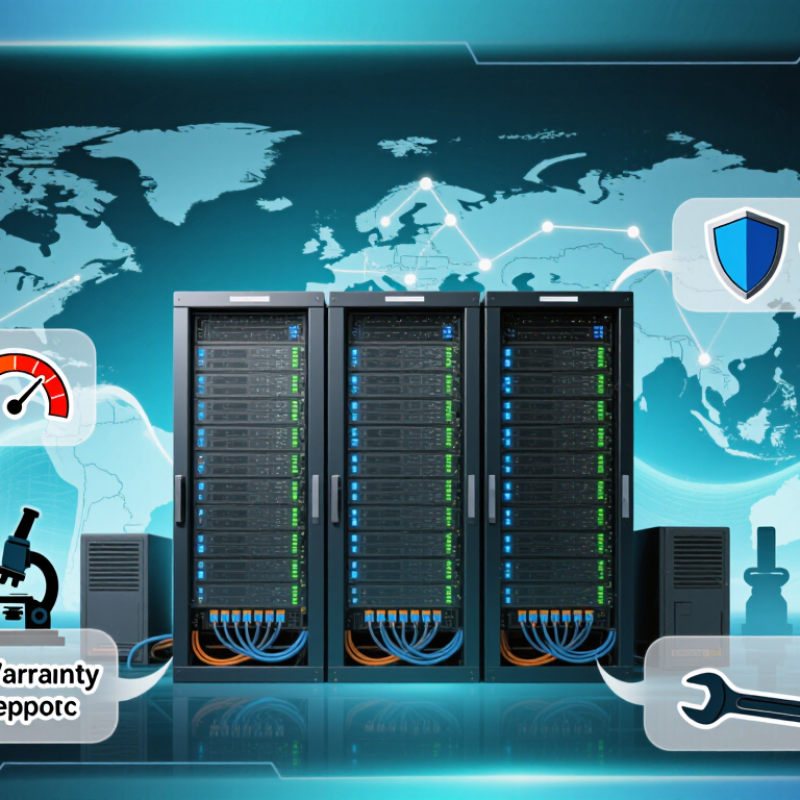
10 Best AI Server Manufacturers for Global Buyers?

What Is an AI Server Manufacturer?

An AI server manufacturer is a company that designs, builds, tests, and supports computer systems for artificial intelligence workloads. It combines processors, accelerators, memory, storage, high-speed networking, power systems, and cooling inside a dependable chassis. This work is more demanding than assembling ordinary office servers. Training models can keep equipment under heavy load for days or weeks. Small design errors may cause overheating, unstable performance, or expensive downtime. Heat matters.

A capable manufacturer should provide more than impressive specifications. It should explain accelerator compatibility, memory limits, power consumption, rack dimensions, and service procedures clearly. During evaluation, global buyers can request load-test reports, firmware records, warranty terms, and delivery documentation. A reliable supplier also checks airflow with practical measurements, not only attractive diagrams. Remote monitoring, replacement parts, and trained technical support can protect an investment after installation. These details often reveal real engineering experience.

However, no manufacturer is perfect. A published performance figure may not match results in a crowded data center. Cooling performance can change with room temperature, rack design, and maintenance quality. Buyers should ask difficult questions and compare evidence from several projects. Factory testing, traceable components, safety certifications, and transparent communication strengthen trust. Regional compliance also matters because electrical standards, import rules, and data-center requirements differ across markets. A responsible manufacturer admits limitations instead of promising unlimited performance. That honesty may be less exciting, but it is useful when an AI server must run continuously.

How to Evaluate AI Server Manufacturers for Global Buyers

10 Best AI Server Manufacturers for Global Buyers?

Selecting an AI server manufacturer is not a popularity contest. Global buyers need evidence across performance, reliability, service, and total ownership cost. Request independent benchmark results, not attractive claims. Check accelerator compatibility, memory bandwidth, storage throughput, and sustained performance under heat. A system that wins a short test may slow during a twelve-hour training run.

Power deserves equal attention.

The International Energy Agency’s Electricity 2024 report estimates that data centers consumed about 460 TWh globally in 2022. It projects demand could exceed 1,000 TWh by 2026. Gartner’s 2024 forecast also warns that power availability may constrain 40% of AI data centers by 2027.

460 TWh
globally in 2022
1,000 TWh
could be exceeded by 2026
40%
may be constrained by 2027

Ask manufacturers for measured power draw, cooling requirements, rack density, and noise data. Liquid cooling can improve density, but it adds maintenance skills and failure points.

Support separates a specification sheet from a workable deployment.

Evaluate response times, spare-part locations, firmware policies, and technician coverage in your region. Uptime Institute’s Global Data Center Survey repeatedly identifies human error and infrastructure weaknesses as major outage factors. Require clear installation procedures and recovery testing.

No scorecard is perfect. I would weight verified service records above impressive launch-day benchmarks, although that judgment can change after real operating data arrives.

Test a pilot unit before ordering at scale.

10 Leading AI Server Manufacturers and Their Core Strengths

Choosing among the 10 leading AI server manufacturers requires more than comparing processor counts. Each manufacturer usually has a distinct strength. One focuses on scalable rack systems for large data centers. Another specializes in liquid cooling for dense accelerator clusters. A third delivers flexible GPU configurations for model training. Others stand out in enterprise integration, edge deployment, energy efficiency, high-speed networking, storage design, or custom engineering. The tenth may offer dependable global support, spare parts, and rapid replacement services. These differences matter when workloads change quickly.

In procurement projects, I have found that published performance figures rarely tell the whole story. Power limits, cable layouts, firmware quality, and technician access can decide daily reliability. Some manufacturers provide excellent hardware but weaker documentation. Others offer slower systems with better service response. That trade-off is easy to underestimate. My own evaluations have also missed hidden cooling costs, so every recommendation should remain open to review. Measured results from a pilot rack are more trustworthy than attractive specifications.

Tips: Ask for thermal data, noise levels, warranty terms, and verified workload results. Check whether the supplier supports your preferred accelerators and network standards. Request a service-response example from a similar deployment. Compare three-year operating costs, not only the purchase price. Keep spare power supplies and fans available. Small details matter.

10 Best AI Server Manufacturers for Global Buyers

Core strengths across leading AI server suppliers are commonly reflected in accelerator density, high-speed networking, memory capacity, NVMe storage, and redundant power design. The chart uses representative ranges from publicly documented enterprise AI server configurations and does not rank or identify individual companies.

Reference ranges: typical enterprise AI server configurations; exact specifications vary by platform, workload, and cooling architecture.

How AI Server Manufacturers Compare by Performance and Use Case

Comparing AI server manufacturers requires more than counting accelerators.
Performance depends on memory capacity, interconnect speed, storage latency, and thermal design. A system with fewer processors may outperform a larger one during memory-heavy workloads. Real buyers should request benchmark results using their own models, batch sizes, and data formats. Laboratory scores can look impressive. Production behavior is often different.

For model training, prioritize high-bandwidth memory, fast networking, and stable multi-node scaling. For inference, power efficiency, response latency, and compact deployment may matter more. Research teams often need flexible configurations and frequent upgrades. Financial or healthcare users may value audit logs, encryption support, and long-term maintenance instead.

Cooling also deserves attention. Dense systems can consume substantial energy and require careful airflow planning. Small data centers may face limits that specifications fail to show.

A reliable manufacturer should provide clear warranty terms, firmware updates, spare-part access, and tested compatibility with major software frameworks. Ask how failures are diagnosed and how quickly replacement components arrive. This part is easy to overlook.

No comparison remains perfect because workloads change, prices fluctuate, and published benchmarks may favor specific hardware settings. Buyers should score each supplier against measurable business needs, not impressive component lists. The best choice is usually the platform that delivers predictable results, manageable operating costs, and support that remains useful after installation.

What Global Buyers Should Consider Before Purchasing AI Servers

What Global Buyers Should Consider Before Purchasing AI Servers

Choosing an AI server requires more than comparing processor counts. Buyers should match the system to real workloads, such as model training, inference, simulation, or computer vision. A server built for occasional inference may struggle under continuous training. Check accelerator memory, interconnect speed, storage throughput, and expansion capacity. These details often matter more than headline performance.

Power and cooling deserve careful attention. A high-density rack can require specialized airflow, liquid cooling, or upgraded electrical circuits. Ask for measured power consumption at typical workloads, not only maximum ratings. Also confirm rack depth, noise levels, local voltage requirements, and installation conditions. Small mismatches can delay deployment.

Support quality can decide the investment. Review warranty coverage, replacement procedures, remote diagnosis, firmware updates, and the availability of trained technicians in your region. Buyers should also examine import rules, data protection requirements, recycling obligations, and service restrictions in the destination country. Documentation should be clear and technically complete. Vague answers are warning signs.

Run independent benchmarks with your own datasets when possible. Vendor tests may use favorable settings. A perfect specification sheet can still mislead. I would request a short pilot before ordering many systems, although budgets and deadlines sometimes make that difficult. Calculate total ownership cost, including electricity, cooling, software, maintenance, shipping, and future upgrades. The cheapest purchase price rarely tells the full story.

FAQS

What evidence should global buyers request from an AI server manufacturer?

Request independent benchmarks using your models, batch sizes, and data formats. Short tests can mislead. Check sustained performance during a twelve-hour training run, not only launch-day results.

Which hardware specifications matter most for AI server performance?

Review accelerator compatibility, memory capacity, bandwidth, interconnect speed, and storage throughput. Thermal design also matters. A system with fewer processors may win memory-heavy workloads.

How should buyers evaluate servers for model training?

Prioritize high-bandwidth memory, fast networking, and stable multi-node scaling. Ask for results from long training sessions. A single-node score is not enough.

What should buyers consider when selecting servers for inference?

Focus on power efficiency, response latency, compact deployment, and predictable performance. Measure real response times. A powerful system may be unnecessarily expensive for smaller workloads.

How can buyers compare server power and cooling requirements?

Request measured power draw, cooling needs, rack density, and noise data. Check airflow limits carefully. Liquid cooling can improve density but requires trained maintenance staff.

What support services should a manufacturer provide?

Evaluate response times, regional technicians, spare-part locations, firmware policies, and warranty terms. Ask how failures are diagnosed. Replacement delays can stop a useful system.

How can buyers reduce deployment and outage risks?

Require clear installation procedures, recovery testing, audit logs, and encryption support where appropriate. Test a pilot unit first. Small mistakes can become expensive during full deployment.

Should buyers trust published benchmark results?

Treat published results as reference points, not final proof. Request testing with your workloads and data formats. Production behavior may differ, and no scorecard is perfect.

How should a buyer choose between competing manufacturers?

Score each supplier by verified performance, operating cost, service quality, compatibility, and upgrade flexibility. Review real records. My weighting may change after actual operating data arrives.

Conclusion

Choosing the best ai server manufacturer requires more than comparing processor speeds or product prices. An AI server manufacturer designs and delivers specialized systems for demanding workloads such as machine learning, deep learning, data analytics, and high-performance computing. Global buyers should evaluate manufacturers by examining GPU and CPU options, memory capacity, storage flexibility, networking performance, cooling design, reliability, warranty coverage, technical support, and international delivery capabilities.

This overview introduces ten leading types of AI server manufacturers and explains their core strengths without focusing on specific brand names. It compares their solutions by performance, scalability, workload, deployment environment, and total cost of ownership. Before purchasing, buyers should also consider software compatibility, power requirements, data center conditions, security practices, maintenance services, compliance obligations, and long-term expansion plans. A careful assessment helps organizations select an AI server platform that balances performance, operational efficiency, budget, and dependable support for global deployment.

Charlotte

Charlotte

Charlotte is a seasoned marketing professional with a deep understanding of the company's portfolio and a passion for elevating its presence in the market. With a keen eye for detail and a commitment to excellence, she ensures that our professional blog is regularly updated with insightful articles......